What Type of New Jersey Breast Lift is Right for You?
During your consultation, Dr. Parker will explain the degree to which your breasts have sagged. Based on the amount of sagging, he will discuss appropriate treatment options to help make your breasts look more youthful.
I have just a minor amount of sagging
In patients with normal breast anatomy, Grade 1 ptosis and pseudoptosis (breast parenchyma below the level of the fold) who would like larger breasts, breast augmentation alone will provide a nice improvement. This will not only increase the size of the breast, but lift it somewhat higher on the chest wall, as shown in the pictures below before and after breast augmentation alone.
Before & After Breast Augmentation
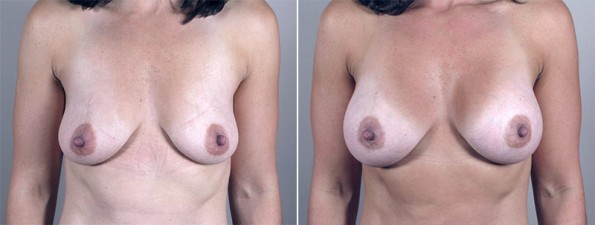
Breast augmentation alone helped correct grade 1 ptosis, or mild sagging, for this patient.
Before & After Dual-Plane 2 Breast Augmentation
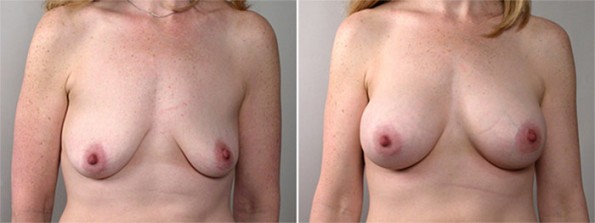
Dr. Parker uses a “dual plane 2” breast augmentation technique to help patients with mild sagging improve breast position without having a formal breast lift.
I have moderately sagging breasts
Patients with Grade 2 ptosis will need re-positioning of the nipple-areolar complex upward with a mastopexy. The type of mastopexy will depend on the severity of the ptosis. Options typically include a crescent, peri-areolar, or vertical mastopexy.
Crescent and peri-areolar mastopexy procedures usually require the insertion of a breast implant to restore lost volume in the upper portion of the breast.
A vertical mastopexy is a powerful operation. Depending on the amount of breast tissue present and your desired outcome, Dr. Parker will discuss your options for performing a vertical mastopexy with breast implants, a fat transfer or auto-augmentation, or a breast lift alone. Examples of these options are shown in the before & after pictures below:
Before & After Crescent Mastopexy with Implants
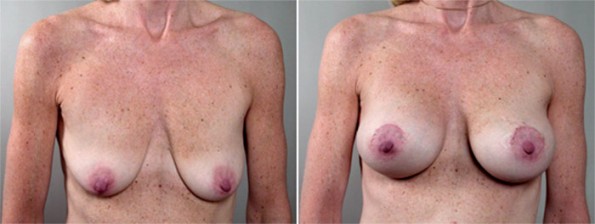
before after
Before & after crescent mastopexy with implants to correct moderate sagging
Before & After Peri-areolar Mastopexy with Implants
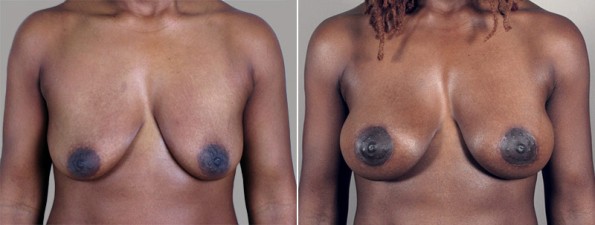
before after
Before & after peri-areolar mastopexy with implants to correct moderate ptosis
Before & After Vertical Mastopexy with Implants
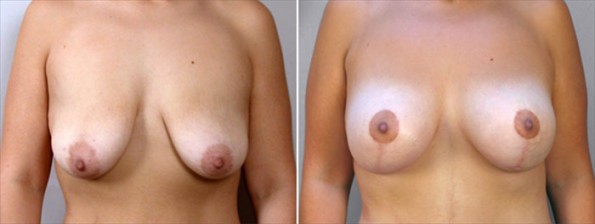
before after
Before & after vertical mastopexy with implants to correct moderate ptosis
Before & After Vertical Mastopexy Alone
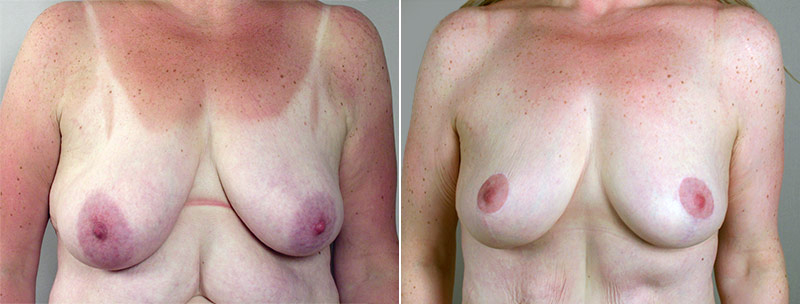
Before & after vertical mastopexy without implants. Note the improved breast shape & improved symmetry.
I have extensive sagging & stretched skin
Patients with Grade 3 ptosis will need re-positioning of the nipple-areolar complex upward with a vertical or inverted T mastopexy, depending on the severity of the ptosis. Additional options include the insertion of a breast implant, as well, if the patient desires more fullness in the upper portion of the breast. Examples of these are shown in the pictures below before and after mastopexy surgery:
Before & After Vertical Mastopexy with Implant
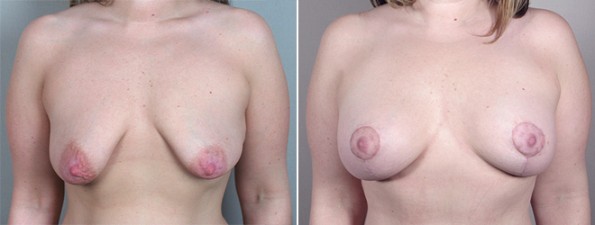
Before & after vertical mastopexy without implants.
Before & After Inverted T Mastopexy
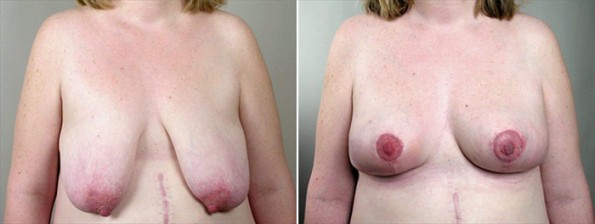
Before & after inverted T or “anchor” lift to correct grade 3 ptosis, following this patient’s 135 pound weight loss.
I have tuberous breasts or another unique case
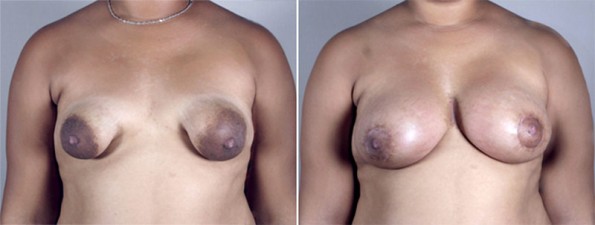
Patients with tuberous (often called tubular) breasts can have a mild to more severe condition of parenchymal maldistribution. The schematic below shows the spectrum of tuberous breasts. The severity of the distortion of breast shape will dictate the extent of correction needed. Dr. Parker will often perform one or more of the following maneuvers: through a peri areola incision, release the constricting fibrous bands in the lower portion of the breast, lower of the inframammary fold, and lengthen the distance from the fold to the nipple. A breast implant is inserted through the peri-areolar incision to maintain these shape changes in the breast as well as provide desired fullness. Finally, a peri areolar reduction and/or lift is performed to improve the aesthetics and position of the areola.
Before & After Breast Lift with Implants
 163 Google reviews